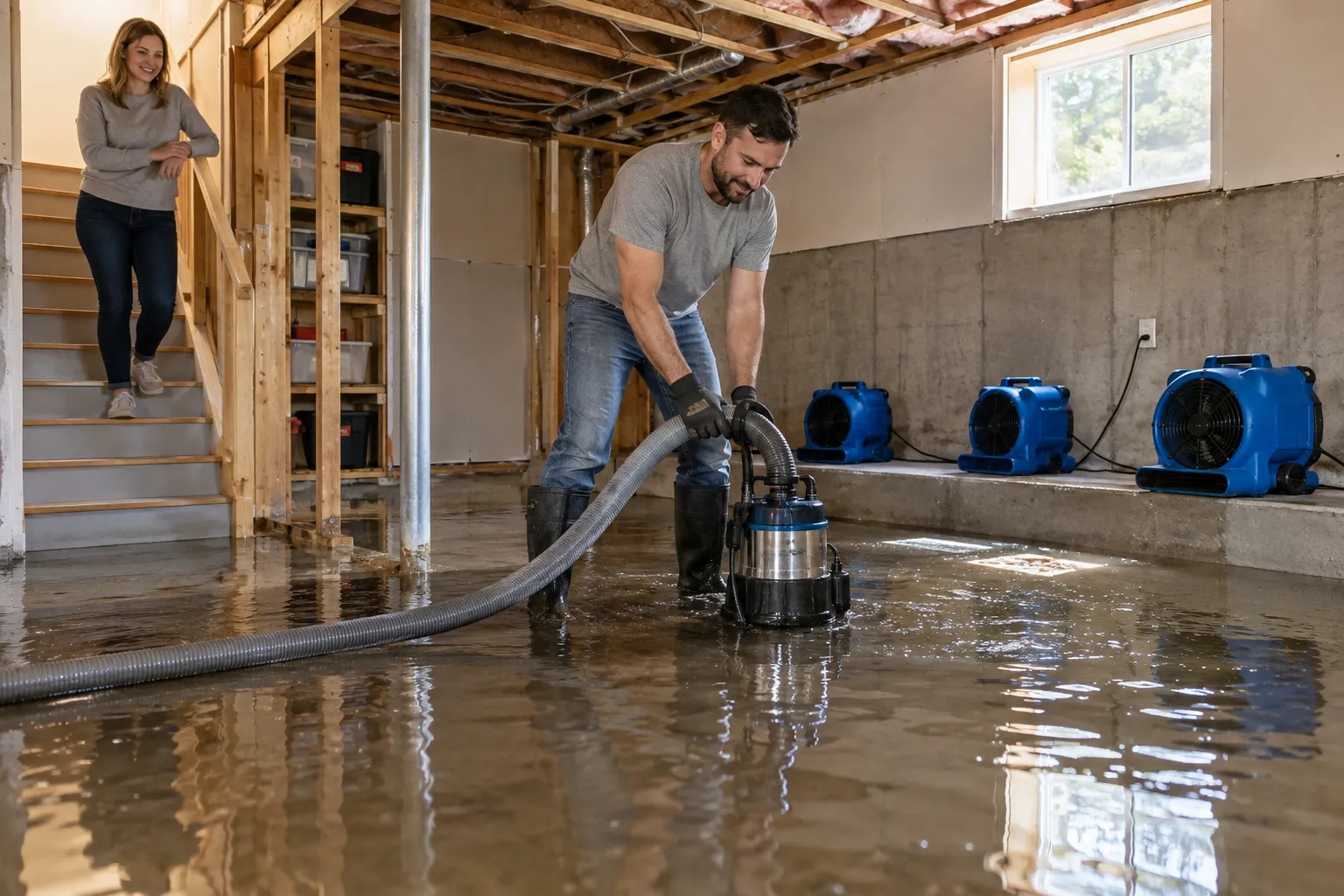
A flooded basement can come from heavy rain, a failed sump pump, a burst pipe, a water heater leak or a sewer backup. Because basements sit below ground, water collects there fast and dries slowly. Cleanup usually means pumping out the water, removing wet materials, cleaning and sanitizing surfaces, and drying the space completely.
Subjectboom Restoration is a referral service. When you call, we connect you with an independent local provider in the Greater Birmingham area who handles basement water cleanup. The provider checks where the water came from, explains what needs to be removed and gives you a written estimate before starting. Quick cleanup can help protect your foundation, stored belongings and finished spaces from lasting damage and mold. There's no obligation to hire the provider you speak with.
Flooded Basement? Safety First
A flooded basement can be dangerous. Before you step down the stairs, think about electricity. Water can reach outlets, extension cords, the furnace, the water heater and the electrical panel. If the panel is in the basement and you would have to walk through water to reach it, don't. Call your utility company or an electrician to shut off power safely.
Also watch for gas smells. If you smell gas, leave the home and call your gas company from outside.
Once it's safe, get help on the way. The sooner water is pumped out, the less it soaks into walls, framing and stored items.
Find Out Where the Water Came From
The source of the water shapes the whole cleanup. Tell the provider what you know. Common causes include:
Heavy Rain and Groundwater
Rain can saturate the soil around your foundation. Water then seeps through cracks, wall joints and the gap where the floor meets the wall. Window wells can fill and leak inward.
Sump Pump Failure
If your sump pump loses power, clogs or wears out during a storm, water can rise quickly. Many floods happen when the pump stops at the worst possible time.
Plumbing and Appliance Leaks
Water heaters, washing machines, utility sinks and supply lines often sit in the basement. A failed tank or burst hose can release a lot of water.
Sewer Backups
During heavy rain, sewer lines can back up through floor drains. This water is contaminated and needs careful handling. Keep children and pets out of the area.
Why Basement Floods Need Fast Action
Basements are cool, dark and often humid even on a good day. Add standing water, and the conditions for mold are ideal. Mold can begin to grow within one to two days.
Water also damages what's stored down there. Cardboard boxes collapse. Photos and papers stick together. Furniture and carpet soak through. In finished basements, drywall, insulation and flooring can be ruined.
Long-standing water can also put pressure on your foundation walls and floor. Getting it out quickly protects the structure of your home.
What Flooded Basement Cleanup Includes
Every basement is different, but most cleanups follow the same core steps.
Pumping Out the Water
For deep water, the provider uses submersible pumps to move it outside. Extractors then remove what's left from the floor and any carpet.
Removing Wet Materials
Wet carpet and pad, soaked drywall, insulation and damaged paneling are usually removed. In unfinished basements, there may be less to tear out. Wet cardboard and soft items that can't be dried are bagged for disposal.
Cleaning and Sanitizing
Floors and walls are cleaned to remove mud, silt and residue. If the water came from a sewer backup or outside flooding, surfaces are sanitized to reduce bacteria and odors.
Drying the Basement
Air movers and dehumidifiers dry the concrete, framing and any remaining walls. Concrete holds moisture, so basement drying can take longer than drying an upper floor. The provider takes moisture readings to confirm when the space is dry.
Finished vs. Unfinished Basements
An unfinished basement with bare concrete walls and floors is usually simpler to clean up. Most of the work is pumping, cleaning and drying.
A finished basement takes more work. Water hides behind drywall, under carpet and inside insulation. The bottom of the walls often has to be cut out so the framing can dry. Once dry, the provider can talk with you about repairs.
Flooring matters too. Carpet and pad on a concrete slab usually need to come up. Vinyl plank and laminate can trap water underneath, so some boards may need to be lifted to check. Tile and sealed concrete tend to handle water better, but grout lines and the slab below still need to dry.
After the Cleanup
Once your basement is dry, it's a good time to look at why it flooded. The provider may point out cracks, low spots or drainage problems they noticed during the job. Some issues, like a failed sump pump or a foundation crack, may need a plumber or foundation contractor. Ask the provider what they saw so you can plan your next steps.
Keep a dehumidifier running in the basement during humid months. It helps keep moisture levels down and makes it harder for mold to return.
Your Belongings
Sort your stored items as soon as it's safe:
- Move dry items to an upper floor.
- Set aside photos, papers and keepsakes. Some can be air-dried or frozen until they can be restored.
- Throw away food, cosmetics and medicine that touched floodwater.
- Take photos of damaged items for your insurance records.
Many homeowner policies treat basement flooding differently depending on the cause. Some need a separate sump pump backup or flood coverage. Check your policy and call your insurer early. Providers can often help document the damage for your claim.
Questions to Ask the Provider
The providers in our network are independent businesses. Before work begins, ask:
- Where do you think the water came from?
- What will you remove, and what can be saved?
- How long do you expect drying to take?
- Can I get a written estimate before you start?
You're never obligated to hire the first provider you speak with.
Water in your basement now? Call to check provider availability near you.
What's Included
Water Pumping and Extraction
Pumps and extractors remove standing water from the basement floor, drains and carpet.
Debris and Material Removal
Wet carpet, drywall, insulation and ruined stored items are removed and hauled out.
Cleaning and Sanitizing
Floors and walls are cleaned of mud and residue, and sanitized after dirty water.
Basement Drying
Air movers and dehumidifiers dry concrete and framing, checked with moisture readings.
What Does Flooded Basement Cleanup Cost?
Cost depends on water depth, the type of water and whether the basement is finished. These are typical U.S. ranges that vary by job, so always get a written quote.
| Item | Typical range | Notes |
|---|---|---|
| Unfinished basement cleanup | $500 – $3,000 | Pumping, cleaning and drying bare concrete |
| Finished basement cleanup | $3,000 – $10,000+ | Includes removing drywall, carpet and insulation |
| Per square foot | $3 – $7 | Higher for sewage or floodwater |
| Sewage backup cleanup | $2,000 – $10,000 | Extra sanitizing and disposal |
| Debris and contents removal | $200 – $1,000 | Depends on volume hauled away |
| Sump pump replacement | $600 – $2,000 | Often done by a plumber, not the cleanup provider |
How It Works
1. Call Subjectboom Restoration
Tell us about the flooding and your location. We connect you with a local provider.
2. Pump Out and Inspect
The provider removes standing water and checks the source and the damage.
3. Remove and Clean
Wet materials are removed, and the basement is cleaned and sanitized as needed.
4. Dry and Confirm
Drying equipment runs until moisture readings show the basement is dry.
Why Call Subjectboom Restoration
Quicker Path to Help
One call connects you with a local provider who handles basement water cleanup.
Local Experience
Providers in the Greater Birmingham area know local soil, weather and the basements common in the area.
Clear Estimates
Ask for a written estimate before work starts, so there are fewer surprises.
No Obligation
Talk to a provider, ask your questions and decide what's right for your home.